WWomen & Work
All Stories
Netherlands · 8 min read

Tatiana Svetlova

Digital Product Leader (Product Owner)

Warehouse operations → Digital Product
Four offers in two months — during the darkest period.
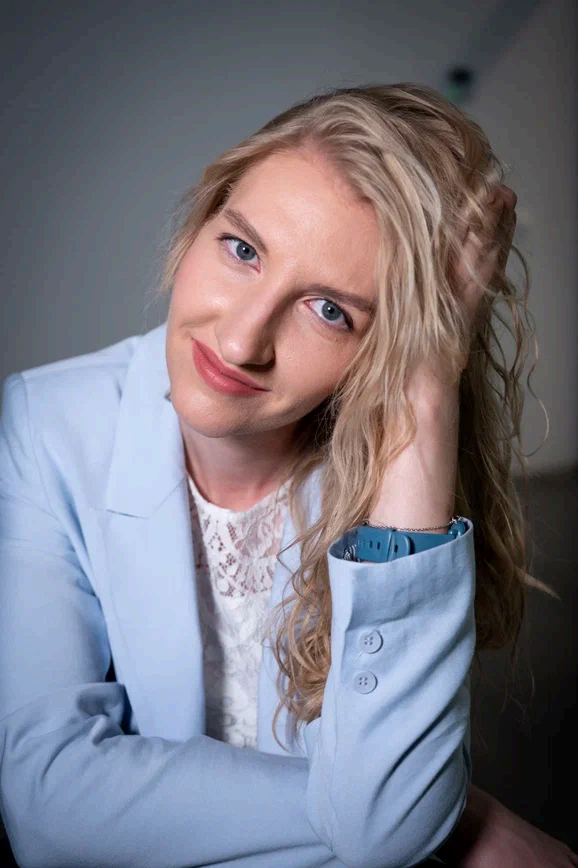
Portrait of Tatiana, Digital Product Leader in the Netherlands.
Quick Facts
Industry
Home furnishing retailer
Country
Netherlands (Delft)
Current role
Digital Product Leader / Product Owner
Previous field
Warehouse operations team leader
The Story

When people talk about 'moving,' they usually think of boxes, documents and a new address. But there is a harder layer — work. Even with deep experience and a clear profession, everything can start from zero in a new country.

Context

I work as a Digital Product Leader — you could call it Product Owner — at the headquarters of a large home goods retailer in Delft. I'm responsible for part of the Microsoft platform and other digital solutions for around 20,000 office employees across 36 countries.

Before that, I worked in the Moscow region, in the warehouse of a large household goods retailer. I had a team of 14 people; the warehouse ran 24/7. The standard systems weren't adapted to the Russian reality, so we wrote a lot of software ourselves — junior, middle and senior developers, as much as the budget allowed. My title was team leader. In essence, I was a junior product owner building software from scratch.

The starting point — chaos

When the events of February 2022 began and the business decided to suspend sales, we, the employees, found out from the news. I was in the warehouse, we were still loading orders, and a friend called me to say 'the stores are closing.' It was a shock.

I started writing a list of everyone I had ever worked with — in Russia, Sweden, other countries — and just wrote to people: 'Can we talk? What's going on? Are there any options?' A few days later, my husband announced that he was leaving. I was left without a home, without a clear job and without any support — all at once.

The company survived COVID and a bunch of crises. We thought we could handle anything. But we couldn't handle the war.

Job search — the core

I started applying everywhere. Three resumes in two languages: business analyst, scrum master, product owner. Everything I really knew how to do. I also took a temporary job at a Russian company for a month — not because it was a dream job, but because I needed something to hold on to: discipline, structure, money.

I needed to keep myself busy with something so I wouldn't fall apart.

About 26 applications total, across the world — from Sweden to Indonesia. Each one had a separate resume and cover letter. The hardest part wasn't writing them. It was not knowing what to say when interviewers asked: are you alone or are there two of you? Where will you live? How much money do you need?

You're going through an interview and at the same time deciding what your life will look like.

Two years earlier, I had also been searching — and nothing worked. I was trying to stay inside my old boundaries: my home, my husband, my life in Russia. Then — four offers in two months. I realised it wasn't me.

Don't knock on doors that aren't yours. If it doesn't work out for a long time, you're doing something wrong.

CV, LinkedIn, networking

Several versions of my resume in two languages, for different roles. I saved every job description — the listing disappears, but I needed it to prepare for the interview. Each vacancy had its own resume and cover letter. A lot of work — but otherwise it's a lottery.

You won't be a star at your first interview. And that's okay.

I had 100–150 LinkedIn contacts. Networking played a decisive role. Every offer I received came from a place where someone knew me or could recommend me. I helped students and friends prepare their CVs for international jobs — even with only 30 contacts, some of them landed jobs in Germany.

Feelings

Fear. A feeling that everything was falling apart. A constant sense of anxiety. The 'stop and feel' strategy doesn't work for me. In a crisis, I need to do something.

I cry, wash my face, put on red lipstick — and move on. Otherwise, I just fall apart.

I learned that the number of attempts matters. That confidence comes not from words, but from lived experience. If it didn't work out on the tenth try, it doesn't mean it never will.

Advice

Don't go to your first interview like it's a life-changing event. Choose a few companies 'for practice.' See where you get lost, where you struggle, and prepare. And if it doesn't work out for a long time — maybe you're just going in the wrong direction.

Key Lessons

What this story teaches

  • Networking does the heavy lifting. Every offer Tatiana received came through a warm contact.
  • Use early interviews as practice. The first one isn't supposed to be perfect.
  • When stuck, change the door — not the volume of knocking.
  • Keep doing something concrete every day, even a temporary job, when life is in freefall.
  • Save every job description you apply for — you'll need it to prepare for the interview.
Resources mentioned
  • Tatiana on LinkedIn
  • Networking through former colleagues — your strongest channel
  • Interview practice as a separate skill from job applications
Related Insights

Explore the research behind this story

Related Stories

More journeys

Back to Stories