WWomen & Work
All Stories
Cyprus · 7 min read

Veronica Yaichik

Frontend Developer

Petrochemicals → IT
They told me wives don't find work here.
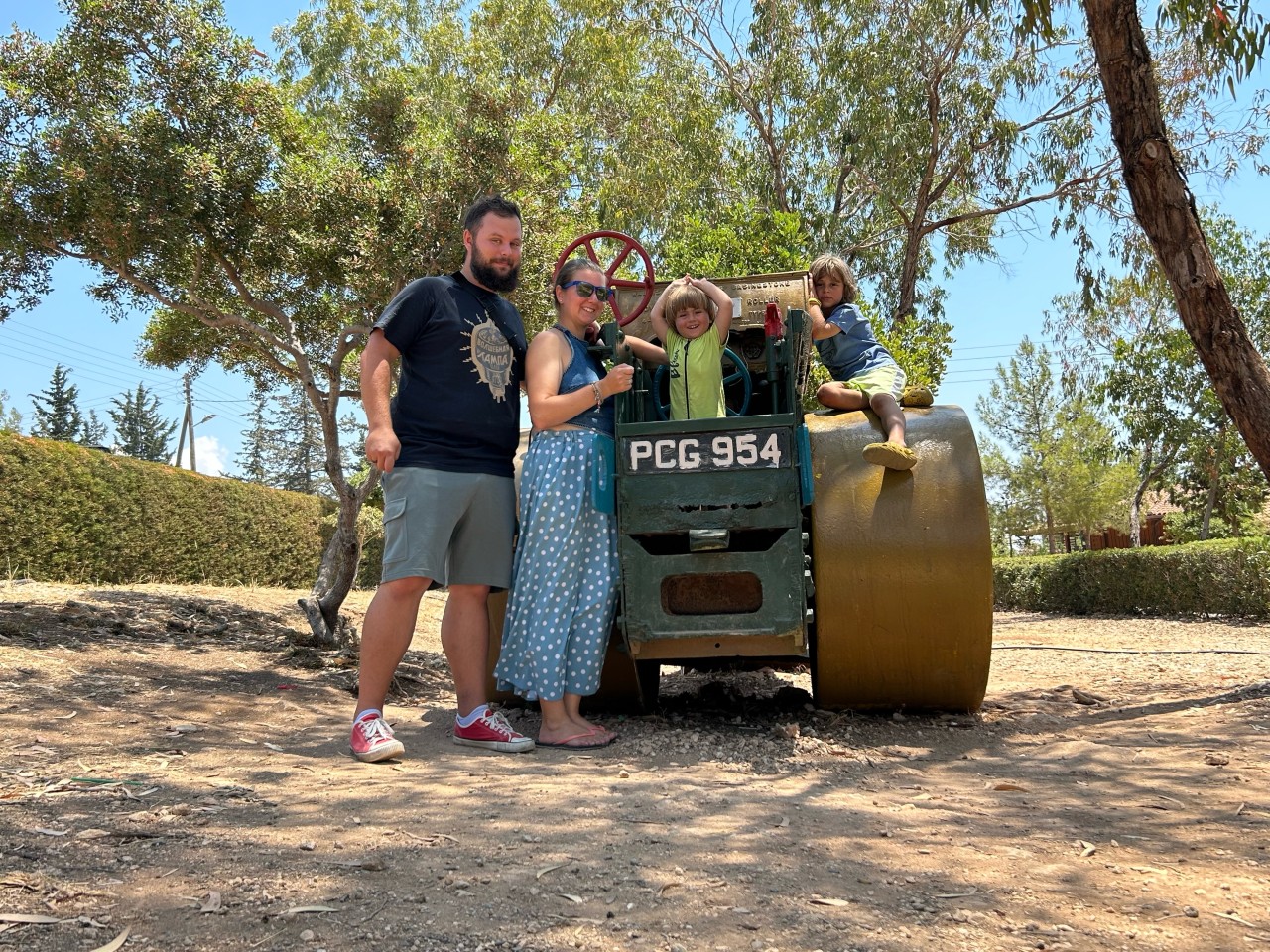
Veronica with her family in Cyprus.
Quick Facts
Industry
IT
Country
Cyprus
Current role
Frontend Developer (banking app)
Previous field
Petrochemicals — Process Engineer
Family status
Married, with kids
The Story

When Veronica moved to Cyprus, she was quickly made to understand that wives don't find work here. She heard those words again and again — and for a while, she almost believed them.

Context

Q

What country do you live in now, and what do you do?

A

I live in Cyprus and work in IT — on a banking app project.

Q

What was your profession before you moved?

A

I worked as a process engineer in petrochemicals. I studied environmental engineering and worked in oil and gas. During maternity leave I tried SMM part-time, but always came back to my main profession.

When my husband and I realised we were moving to Cyprus, I 'waited' to see what was available. It turned out there were no companies that matched my experience. The idea of going into IT had come during my first maternity leave — I studied Python on my own, but it didn't lead anywhere. A month before the move, my husband and I paid for JavaScript courses to retrain as a front-end developer. I studied for nine months while already living in Cyprus. So my starting point after the move was education.

The market and reality

I found my first job remotely — for a Russian company. I worked remotely for over a year while trying to find options in Cyprus. The problem was that, after 2022, a lot of strong tech specialists moved here, and juniors weren't particularly needed.

I searched on LinkedIn and through acquaintances. I went to playgrounds with the kids and tried to talk to people. My experience came less from the main remote job and more from charity projects and internships — including a project for the 'Dary Eda' foundation.

Juniors weren't particularly needed.

At some point, after about a year of commercial experience, local HR managers in Cyprus started writing to me on LinkedIn. I had interviews at four companies, and at the fourth one — we hit it off.

Job search

My overall goal was an independent visa. I live under a spouse-employee status, which is dangerous: if my husband loses his job, we all lose our visas — me and the children. So I always thought about working in Cyprus.

If my husband loses his job, we all lose our visas — me and the children.

Realising how junior I was, I didn't bombard companies with applications. When HR wrote to me, I responded — but the big companies all rejected me: 'You have less than three years of experience, come back in two years.' In the end, four companies were a good fit for my stack.

I think the timing also mattered: in Cyprus activity peaks in summer. And updating my CV with the charity project — a real, large piece of work — definitely helped.

LinkedIn, resumes and interviews

I set up my LinkedIn profile myself, then asked my husband — who works in IT — to look at it with that lens and tell me what to cut and what to add.

All the companies I spoke with had multi-stage interviews. First, an HR call with an English check. Then a conversation with a manager checking team fit. Then a technical interview. Finally a meeting with the R&D director about salary and start date. Many people initially assess soft skills rather than knowledge.

Many people initially assess soft skills rather than knowledge.

For each interview I'd go to the company website, paste context into GPT and prepare smart questions to ask. The interviews that went best for me were the ones with a take-home test — I get nervous live, but I can comfortably talk through work I've already done.

Challenges, and what she learned

When I arrived, people kept saying: 'Cyprus is an island of wives. Wives don't work here. Why are you torturing yourself?' Several women I knew finished their courses, tried to find work, and gave up. Others went into HR or accounting — work they had brought from Russia. My specialty was of no use, and I wanted to work in IT. So I was the 'black sheep' who 'banged her head against the wall.'

I was the odd one out, banging my head against a brick wall.

Since I started learning JavaScript, I have discovered a different side of myself. It turns out I am patient — patience came with motherhood. I became less strict with myself. I realised I could find materials on my own, that I improved my technical English just by reading documents. By the end of 2025, I had achieved my goal.

By the end of 2025, I had achieved my goal.
When I was told that wives can't find work here, it plunged me into a terrible depression.
Key Lessons

What this story teaches

  • Don't let other people's defaults become your ceiling — especially in places where 'spouses don't work here' is the norm.
  • If your old profession doesn't match the new market, treat retraining as your first job after relocation.
  • Unpaid charity and internship projects can outweigh a year of mismatched commercial experience on your CV.
  • Take-home tests are an interview format you can win even if live questions make you nervous.
  • Aim for an independent work visa — career goals and family safety can be the same goal.
Resources mentioned
  • Look for courses that offer post-graduation support — not just a certificate.
  • Telegram groups for beginners in your target field.
  • LinkedIn as a long-game showcase: update it even when nothing is happening.
Related Insights

Explore the research behind this story

Related Stories

More journeys

Back to Stories