WWomen & Work
All Stories
Netherlands · 7 min read

Julie

AI Scientist / Bioinformatician

Academia → Industry AI
Being unemployed for the first time — that hurts more than moving with a baby.
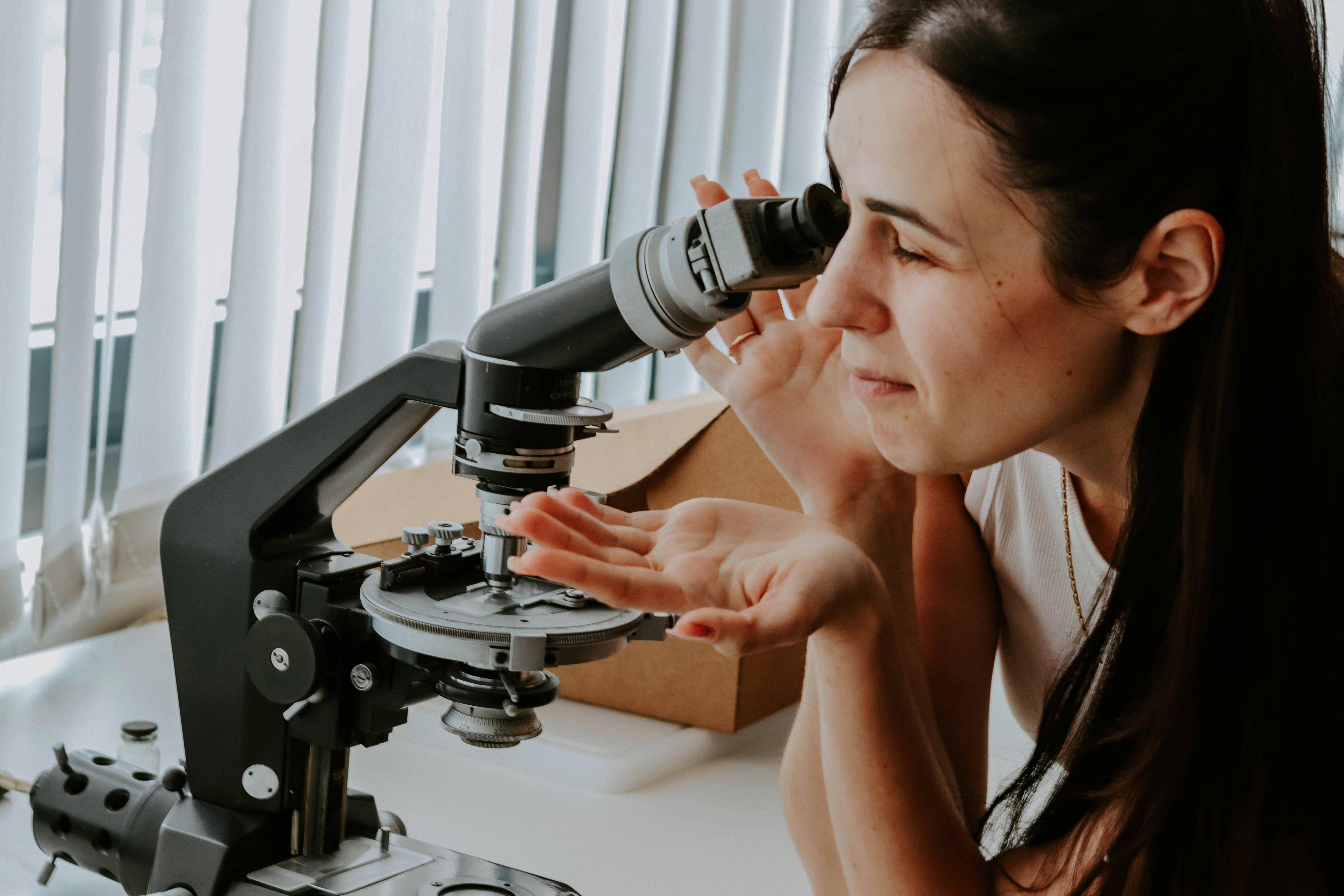
A scientist working in a laboratory — illustrative image.
Quick Facts
Industry
Biotech / AI
Country
Netherlands
Current role
AI Scientist (bioinformatician)
Previous field
Molecular biology / postdoc
Family status
Married, with kids
The Story

When we talk about relocation, we usually focus on logistics: visas, housing, daycare, paperwork. But behind those steps lies something far more personal — identity. Julie is a molecular biologist who became an AI scientist.

Background

I did a PhD in molecular biology. During my PhD I realised staying purely in the lab would be too competitive. My husband — also a computational biologist — strongly encouraged me to learn programming. I started with Python. I'm not an amazing programmer, but I learned enough to apply it to biological questions. That combination became powerful. A postdoc combining biology and bioinformatics eventually opened industry doors.

Programming gave me an edge. It changed the direction of my career.

Starting point — no offer, one baby

I moved without a job. We were in the U.S., I was doing a postdoc, I had a baby. My husband got a position in the Netherlands, so we moved. I assumed I would find something quickly. I was wrong. I was unemployed for six months — the first time in my life.

Transitioning from academia to industry was especially hard. You're highly specialised, but you have to prove you can function in a completely different environment. In the end, I got my job through a contact. Every job ad I applied to rejected me.

The Dutch market

Very specialised. There aren't many relevant positions at my level. About 40 applications in six months. Maybe 10 answered. Around 10 first interviews, 8 second interviews. Zero offers — until the contact opportunity.

English wasn't the issue — my academic background is fully international. My PhD was recognised. But many roles still require Dutch, and the biggest challenge was switching from academia to industry.

The interview process is long: screening, first, second, third, case study, free labour. I once spent two full days preparing a 30-minute case — and received a rejection without feedback. I asked three times for feedback. No answer.

They ask you for days of work — and won't give you five minutes of feedback.

What worked

Speed. If you don't apply within 24 hours, you're probably too late. Recruiters look at the first 50 applications. At first I spent too much time perfecting cover letters. Later: apply fast. Another lesson — apply even if the post is in Dutch. A friend with A1-level Dutch applied and got the job.

On LinkedIn I posted occasionally, even though I hated it. Keywords matter. Activity matters. But honestly: applying immediately matters more than anything else.

Freelancing to bridge the gap

In the Netherlands, daycare support from the government only lasts four months during unemployment. After that, you lose financial support. So I registered as a freelancer and started consulting in bioinformatics. That allowed me to keep my child in daycare, stay professionally active and avoid a visible gap on my CV.

Even small consulting work looks better than a big hole in your CV.

Motherhood and relocation

He was one year old when we moved. Three days a week in daycare. I searched for jobs three days a week. That was probably good for my mental health — not to search the whole week.

Surprisingly, moving with a child wasn't the hard part. Being unemployed was. The Netherlands is much more child-friendly than the U.S. — daycare was easier to arrange (we found it before we found a house).

You cannot stay at home. You have to keep working.

My husband insisted I continue my career. He shared childcare. He was there for every interview. Many women get stuck in stay-at-home roles simply because they don't see another option.

Key Lessons

What this story teaches

  • Speed beats polish. Apply within 24 hours — recruiters often only see the first 50 applications.
  • Apply even when the job ad isn't in your language. Apply anyway.
  • Freelancing is a legitimate bridge — for income, daycare, visa status and your CV.
  • If you have support at home, use it. Don't quietly disappear into stay-at-home defaults.
  • Career transitions (academia → industry) are often harder than the relocation itself.
Resources mentioned
  • LinkedIn — apply fast
  • Biotech job fairs (BioBusiness-style events)
  • Register as a freelancer (ZZP / equivalent) as a short-term strategy
  • Networking through academic and personal contacts
Related Insights

Explore the research behind this story

Related Stories

More journeys

Back to Stories